Data Unavailable
October 16, 2026
It’s a gut punch every time I run into it. A data cliff on a government web page. I’ve known for a while that the current administration has curtailed data collection and reporting related to climate science. Many people are faced with this loss on a daily basis. But I manage to put it out of mind, and optimistically pop over to my usual past sources for information. Until I hit the dreaded red and pink alert box.
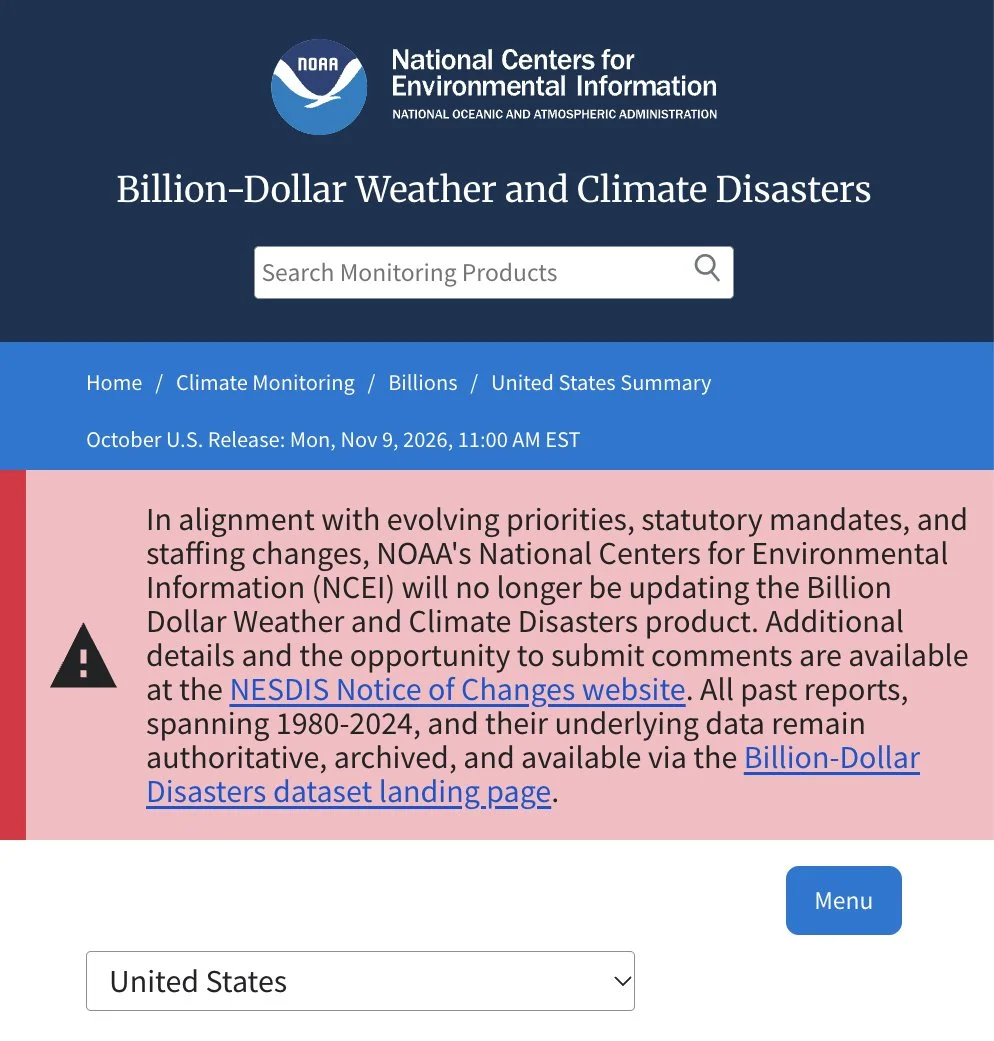
This time I was in search of data related to the financial cost of climate change for the U.S. Specifically, I was looking for losses related to precipitation.
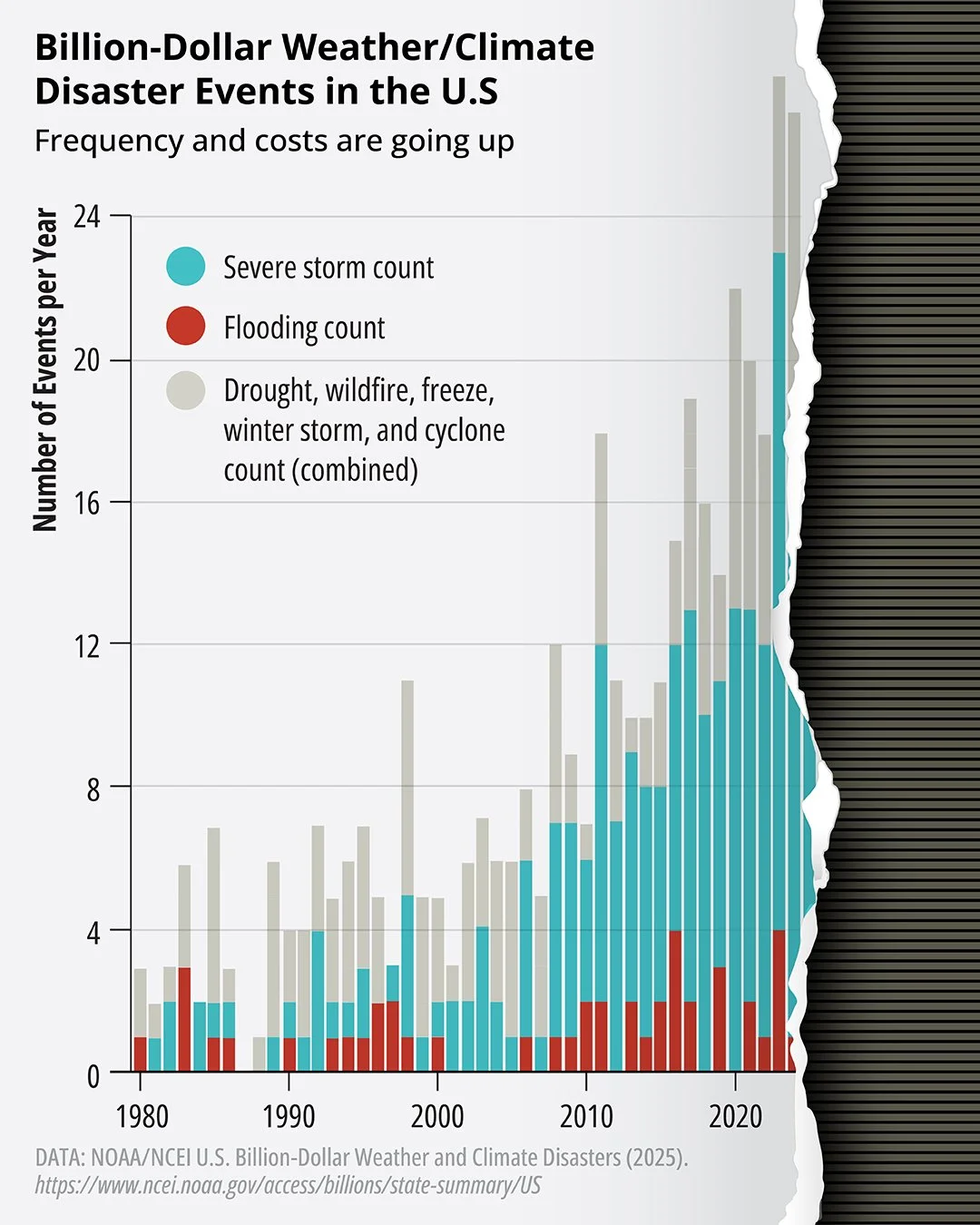
It’s not unusual for data reporting in government portals to lag a bit for complex data that needs time for all variables to settle. This dataset extended through 2024, and I was using it for a class assignment, not a high-stakes public outlet. So I moved forward, figuring that 2024 wasn’t that long ago and still made the point for my purposes. The final project I submitted included a fairly standard chart on billion-dollar weather/climate disaster events in the U.S. paired with one on costs, without comment on the interval shown.
But it made me feel like this, as if something has been torn and taken away from us—the ability to have informed conversations about cause and effect, and the ripple effects of climate change.
It brings to mind artist Mimi Ọnụọha’s work and writings on missing data. Here’s one of my favorite excerpts from her article “What is Missing is Still There,” Nichons-Nous Dans L’Internet (April 2018):*
“Datasets are the end products of classification systems, the clean outputs of intentional orderings...datasets point to their own contrasts—specifically the things that we haven’t collected. And if it is true that we make sense of the world through exclusion,** then perhaps there is a special type of meaning to be found in the things that we leave out.”
In this case, and in this moment, the fact that the current administration is “leaving out” climate data is unsurprising. Albeit devastating. But what will people of the future, distanced from this time, make of the void?
I revisited Ọnụọha’s essay today. And her conclusion gave me shivers.
“Each time we choose what data to collect and imbue that data with validity, we define the terms of the world. But if so, then we are also the ones capable of changing it, and making it different, each and every time.”
That made me think of the heroes at Climate.us, who stepped up quickly to save as much public-facing federal data as they could.
“Climate.us is an independent nonprofit climate information platform created to protect public access to trusted, science-reviewed climate knowledge. Built by members of the team behind NOAA’s Climate.gov, Climate.us provides plain-language climate news, explainers, visuals, data pathways, educational resources, and expert insights to help people understand and use climate science.”
Their work continues.
*To view a pdf of the magazine pages, click on “Nichons-Nous Dans L'Internet | April 2018 What is Missing Is Still There” in the essay section of this bibliography page: https://mimi-onuoha-9s0o.squarespace.com/writing
**Bolded phrase is a nod to a sentiment from Ọnụọha’s fellow researcher John Fass.